
Nataraja, The Dancing Shiva — Lalita Kapilavai — Traditional Artist
© Lalita Kapilavai — Traditional Artist. Digital Atelier & Cultural Archive. Digital reproduction, automated screen captures, and unauthorized printings are strictly prohibited.
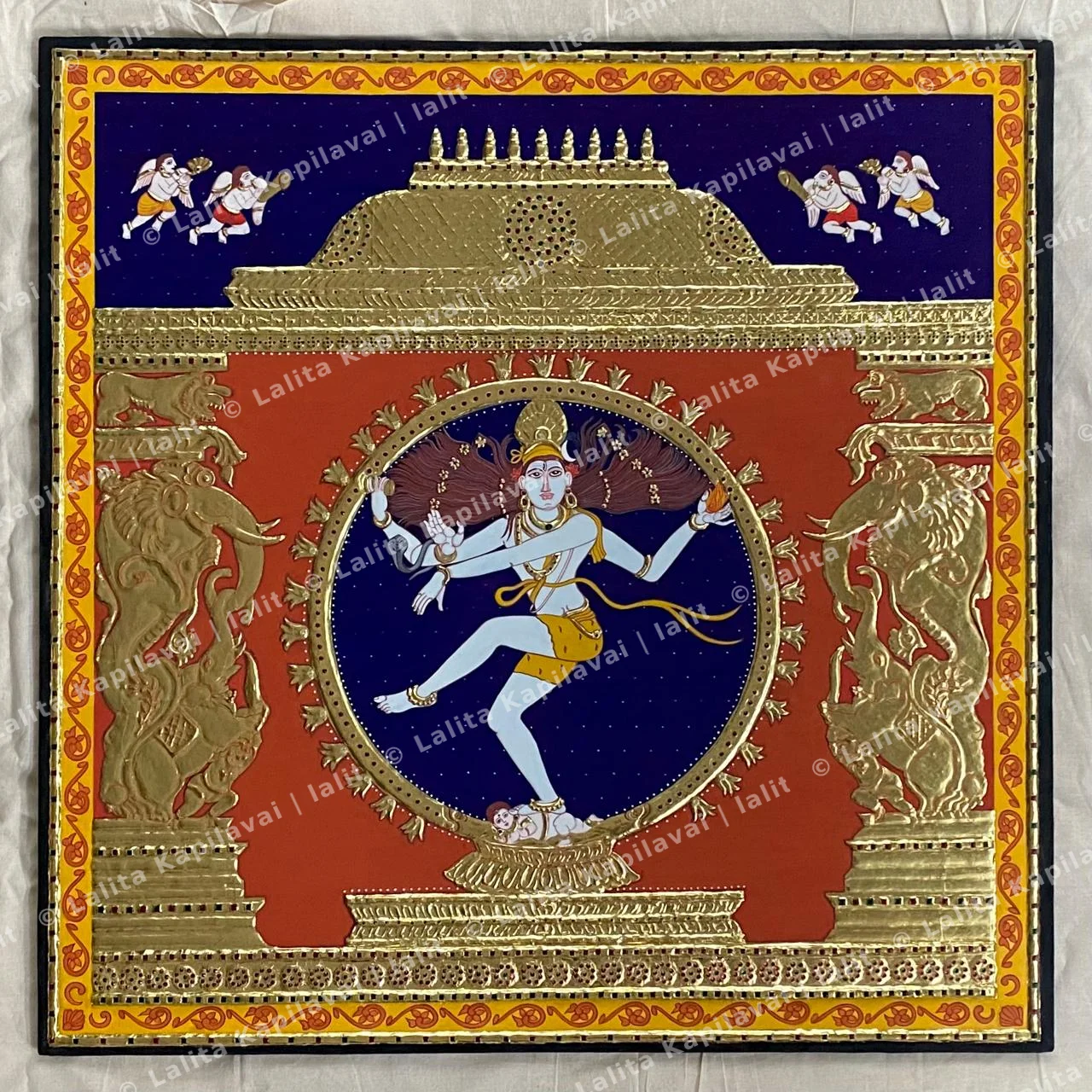
Nataraja, The Dancing Shiva
Natural pigments. Gold foil, Swarovsky crystals, kundans(glass beads) and gesso on handmade board. • L=92cms; W= 92cms
Nataraja, The Dancing Shiva
Iconographic Commentary & Symbolism
Nataraja is a cosmic form of Shiva who performs the divine dance of Anandatandava as he engages in Panchakrityas, the five cosmic acts of Srishti (creation), Sthiti (sustenance), Laya (destruction), Tirobhava (concealment) and Anugraha (grace). This image of a moment in his celestial dance signifies all the five above mentioned acts that he is engaged in doing: the upper left hand with Agni (fire) symbolises destruction, the lower left hand points to his raised foot symbolising grace, lower right hand in abhaya mudra grants refuge to his devotees, his upper right hand plays drum that created ‘Omkara’, the primordial sound and his raised left foot symbolises liberation. The ring of fire around him stands for the manifested universe and continuous cycles of time. The image of Apasmara (a dwarf) crushed under his feet represents ignorance, ego and Maya (illusion).
The dance takes place in Kanaka Sabha in Mount Kailasha which is marked by a highly decorated canopy of gold flanked on either side by two architectural pillars adorned by mythical creatures. The celestial beings hanging in the sky above pay their homage to him as he is engrossed in these sacred and heavenly activities.
