
Kalaprayanam
Honoring my roots - Mastering my Craft
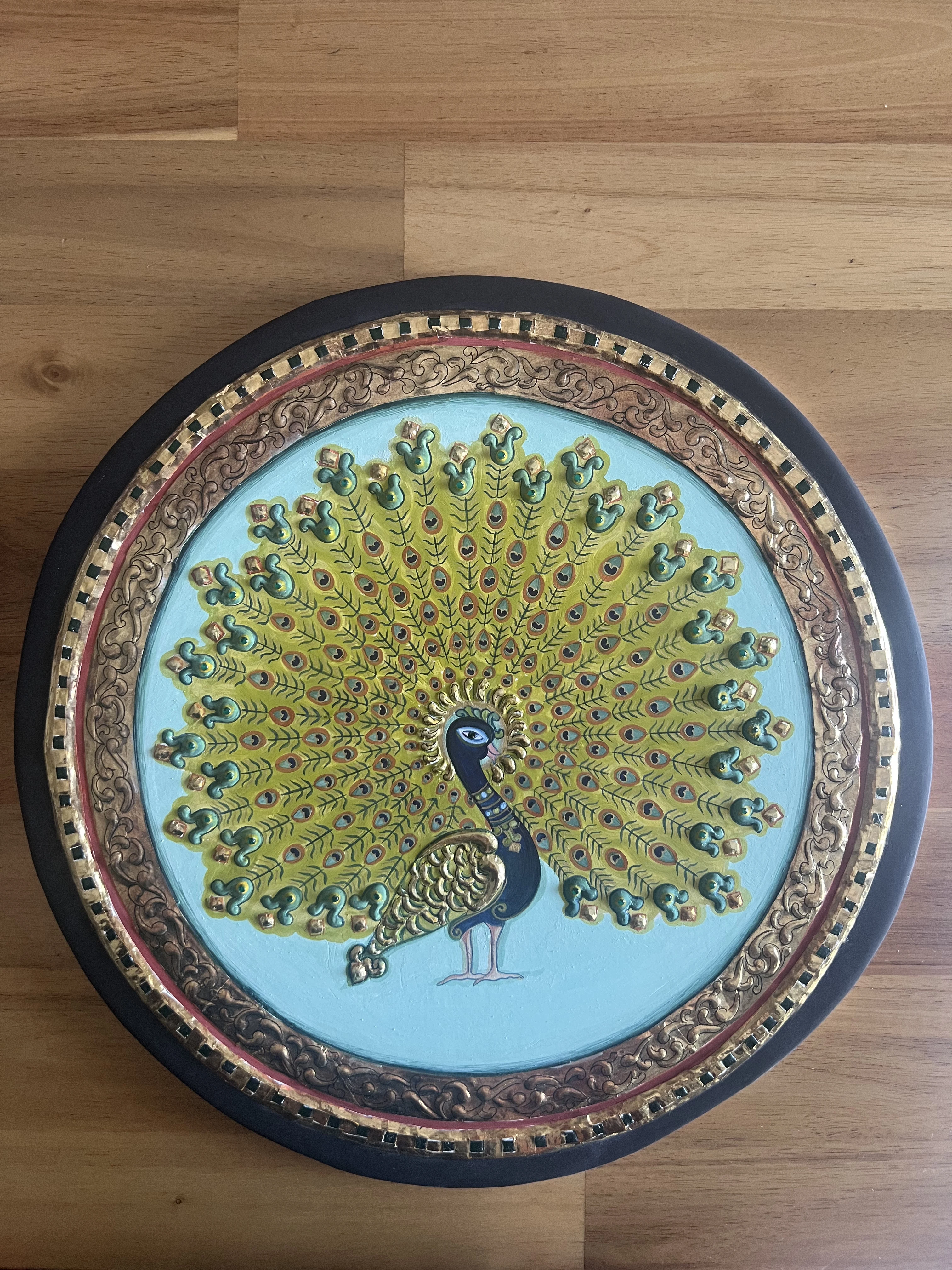
Published by the Atelier of Lalita Kapilavai • Sacred Art & Heritage
Preface and Summary of the Catalog - To Be Updated
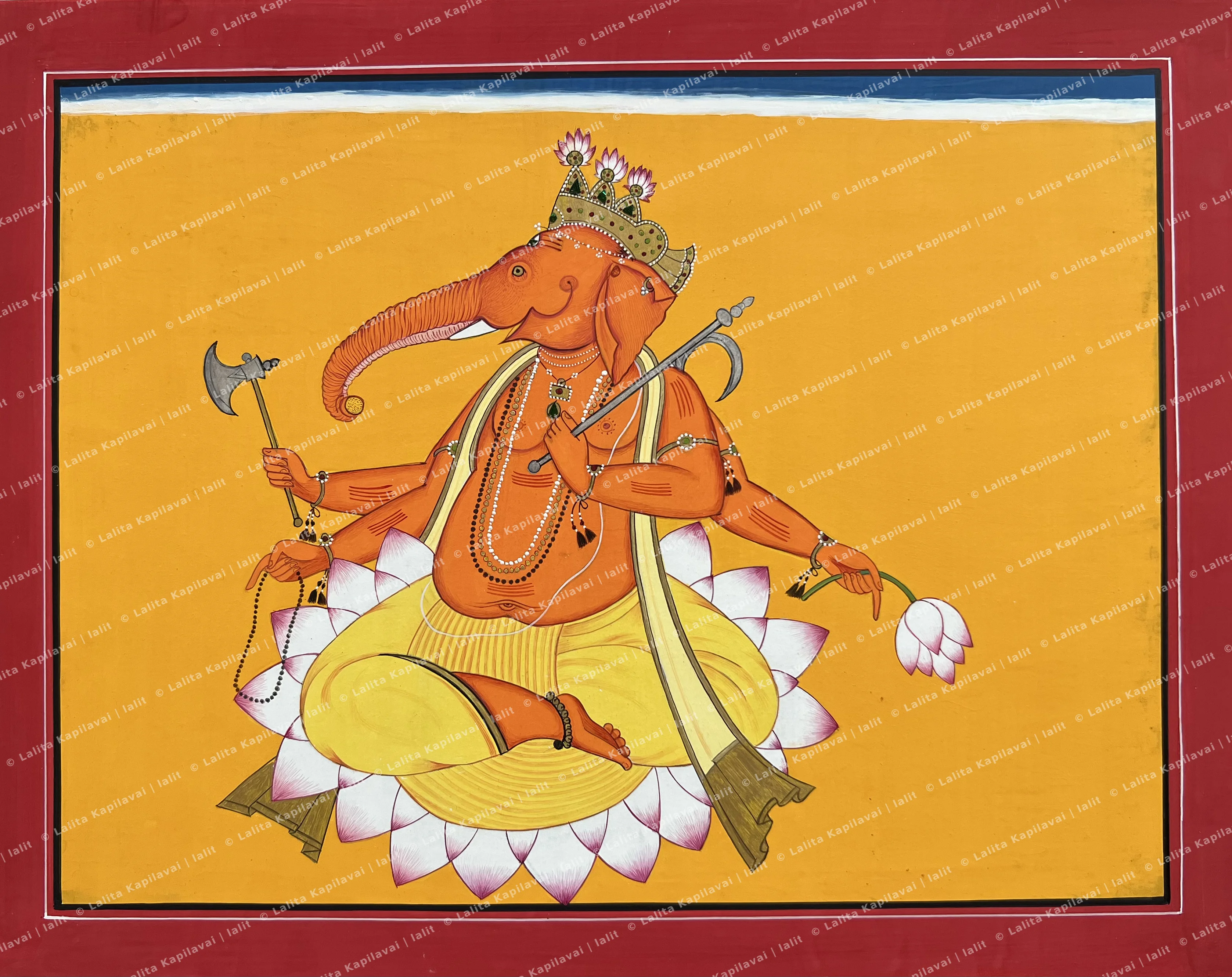
Ganesha the Auspicious god
Basohli • 2026
Medium:Natural pigments, shell gold on Wasli paper
Dimensions:L=27.9cms; W= 20.8cms
Seated cross-legged upon a fully blossomed lotus against a deep yellow ground, the vermilion-hued Ganesha is represented as an auspicious deity and the remover of obstacles (Vighna-hartā). He holds a goad (aṅkuśa) and battle-axe (paraśu) in his upper hands, while his lower hands hold a rosary (akṣamālā) and a lotus flower.
The sky is rendered as a narrow horizontal strip at the upper edge of the composition, a characteristic device of Pahari miniature painting. The bold contours, saturated colours, simplified spatial treatment, and emphatic decorative quality of the image are characteristic of the Basohli idiom of Pahari painting.
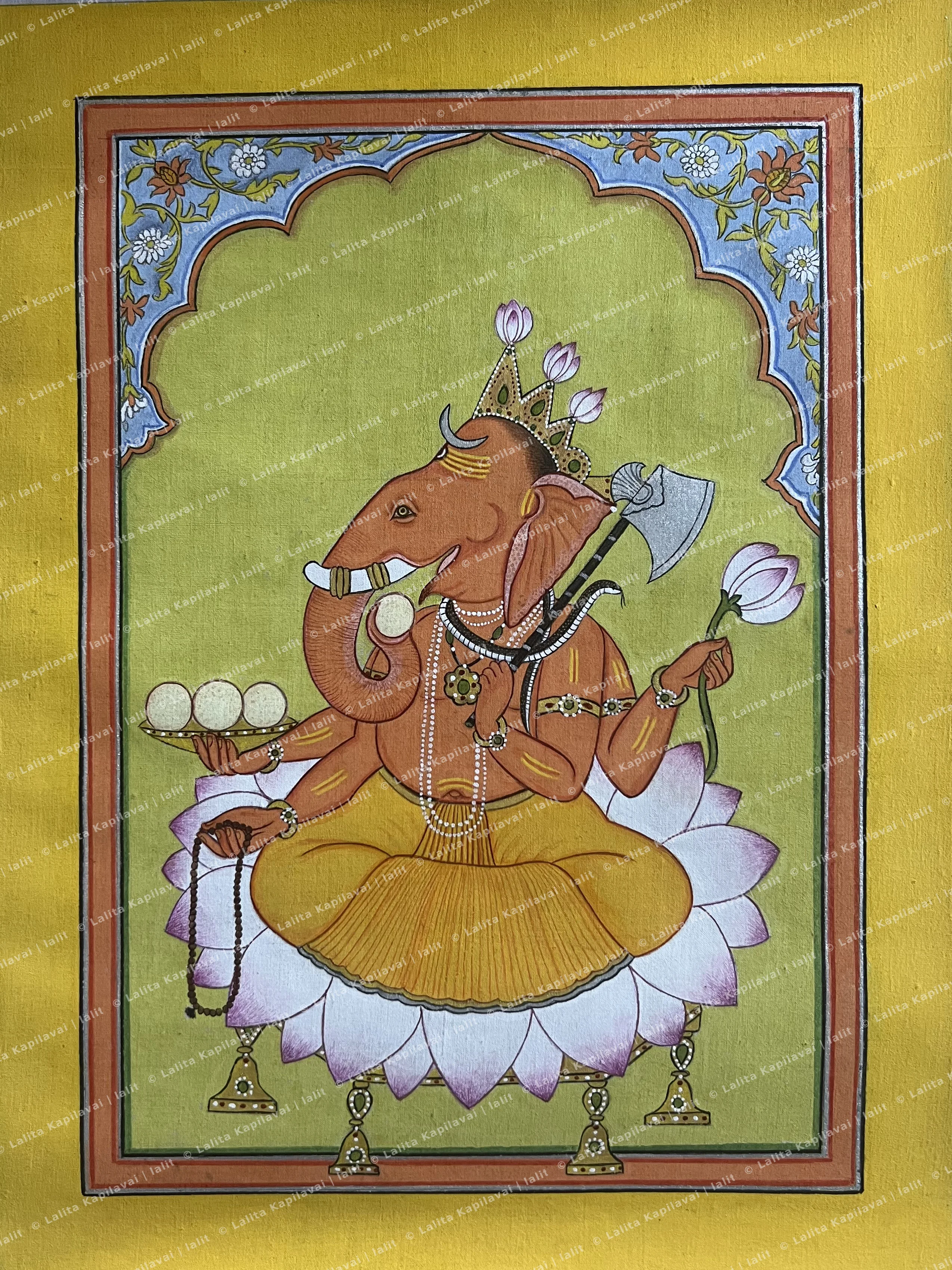
Seated Ganesh
Basohli • 2026
Medium:Natural pigments, shell gold on khadi cloth
Dimensions:L=30.5cms; W= 21.5cms
Gold Leaf:Shell gold on khadi cloth
Ganesha is believed to be the remover of obstacles in our path. Here he is seated on a lotus pedestal that protrudes slightly outside the frame. His body is painted in sindhur or vermilion (common names for orange-red). He bears rosary, modak, axe and lotus in his arms and is in a meditative posture. The image is set against a light green background under a decorative arch.
The technique of painting is slightly different on cloth. The cloth is pasted on a flat wooden board and all the colours are applied. Once the finishing is done, the cloth is removed from the board and burnished from behind in the end. On wasli, burnishing is done many times at every stage of colour application before beginning to finish the painting. Once the painting is complete burnishing is never done.
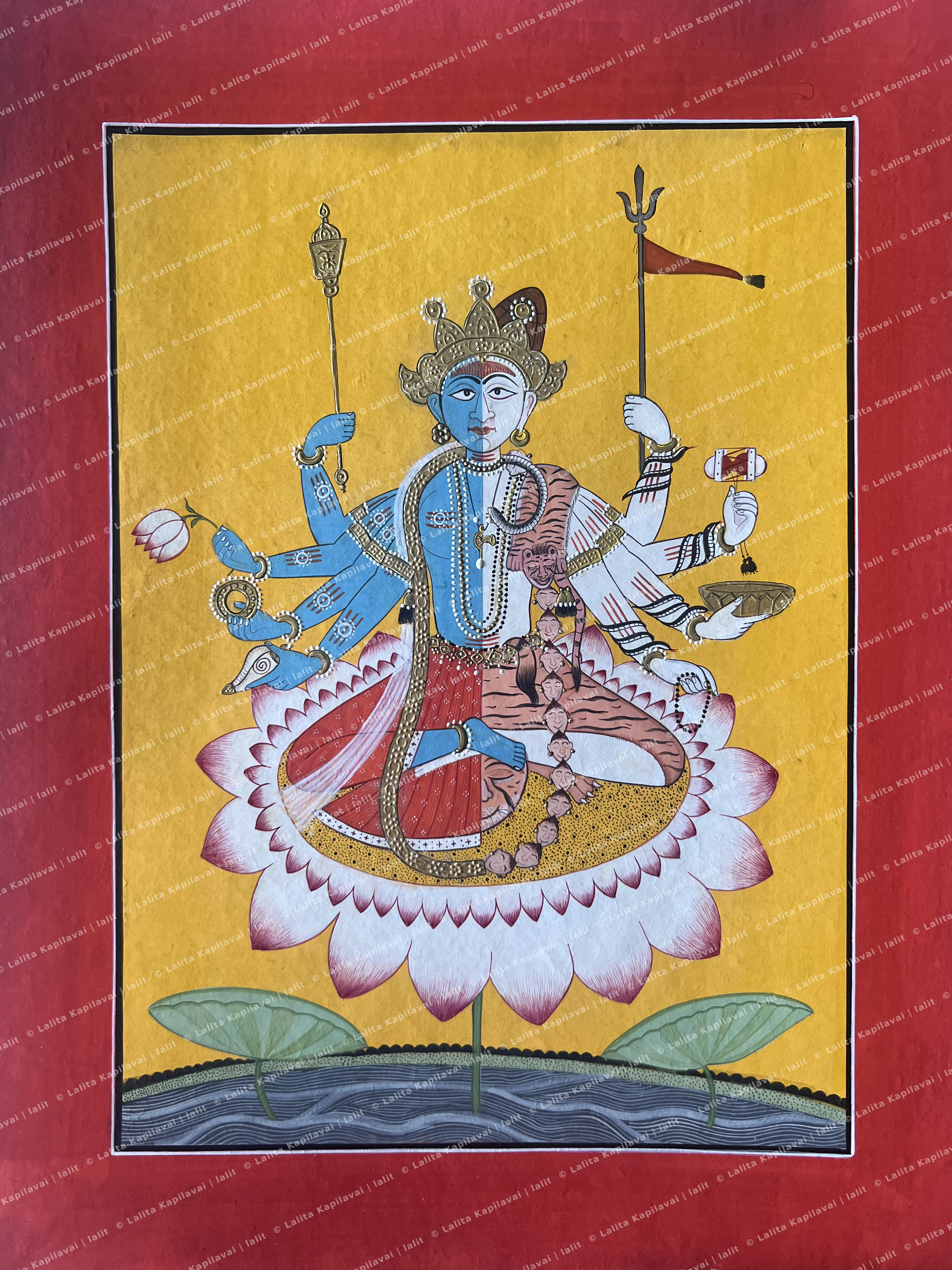
Harihara
Basohli • 2026
Medium:Natural pigments, gesso, shell gold on Wasli paper
Dimensions:L= 24.8cms; W= 18cms
The painting depicts Harihara, the composite form of Vishnu (Hari) and Shiva (Hara), symbolizing the essential unity of the two principal Hindu deities. The figure is divided vertically, with the blue-hued Vishnu occupying one half and Shiva the other, each distinguished by their characteristic attributes and ornaments. In his eight hands, he holds the attributes of both Vishnu and Shiva.
Seated upon a fully blossomed lotus against a brilliant yellow ground, the deity is rendered with strong contours, vibrant colours, and a highly decorative treatment. The symmetrical composition and bold chromatic scheme are characteristic of the Basohli style of Pahari miniature painting.
Rama Parivar
Basohli • 2026
Medium:Natural pigments, shell gold on Wasli paper
Dimensions:L=29.4cms; W= 21.2cms
Gold Leaf:shell gold on Wasli paper
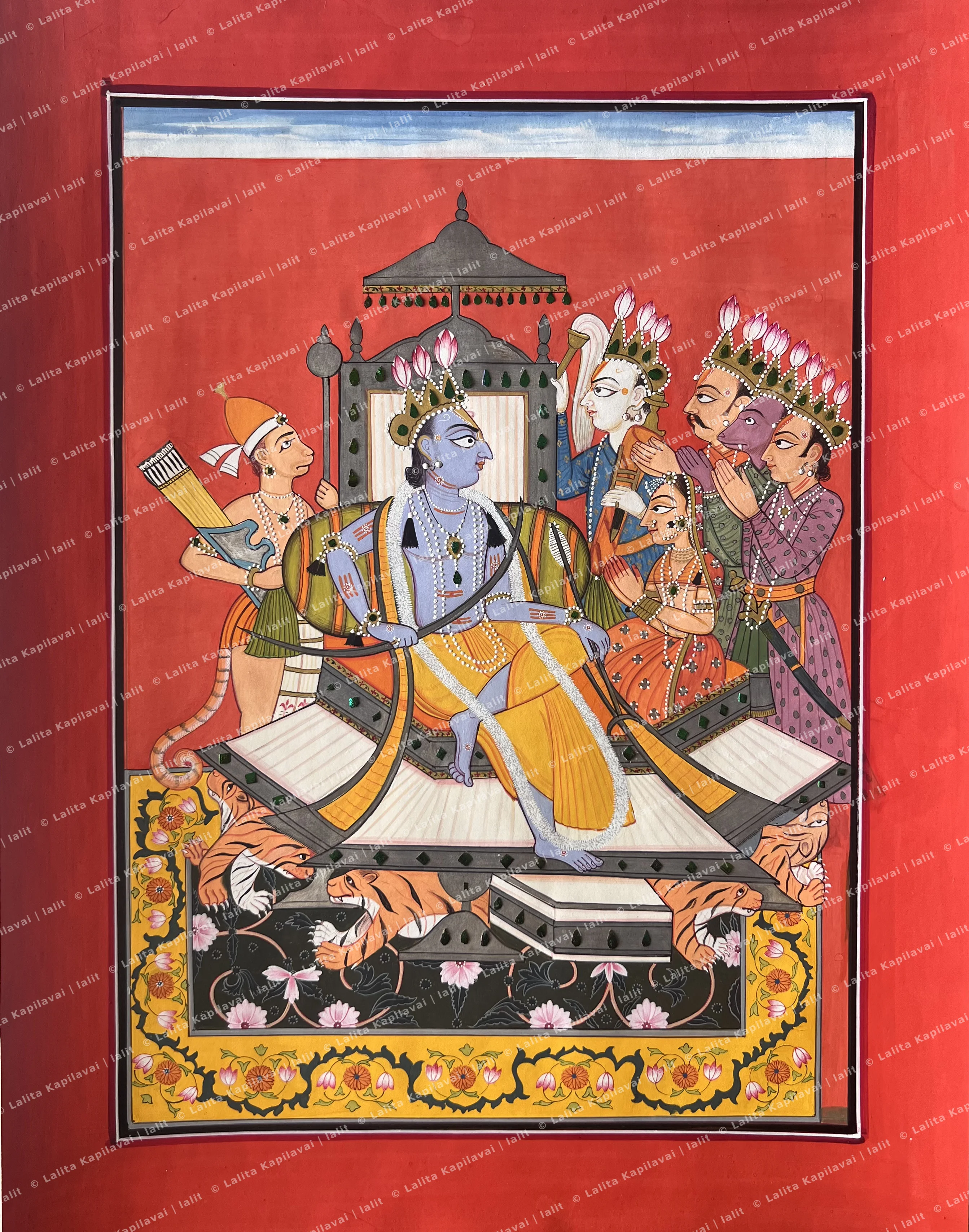
Against a red background, Rama is seated upon a high, canopied throne. Crowned and blue-complexioned, he wears a yellow dhoti and holds a bow and arrow in his hands. His devoted wife, Sita, sits before him with folded hands, looking towards her lord. Behind her stand Lakshmana, Bharata, Jambavanta, and Shatrughna, depicted in readiness. Behind Rama stands his devoted follower, Hanuman, holding a quiver of arrows and a mace.
The tiger supports of the throne rest upon a black carpet adorned with floral and foliate designs. The warm, vibrant colour palette and bold decorative treatment are characteristic of the Basohli style.
Pancamukha Shiva
Basohli • 2017
Medium:Natural pigments, shell gold and shell silver on wasli paper
Dimensions:L= 24cms; W= 21.5cms
Gold Leaf:Shell gold and shell silver on wasli paper
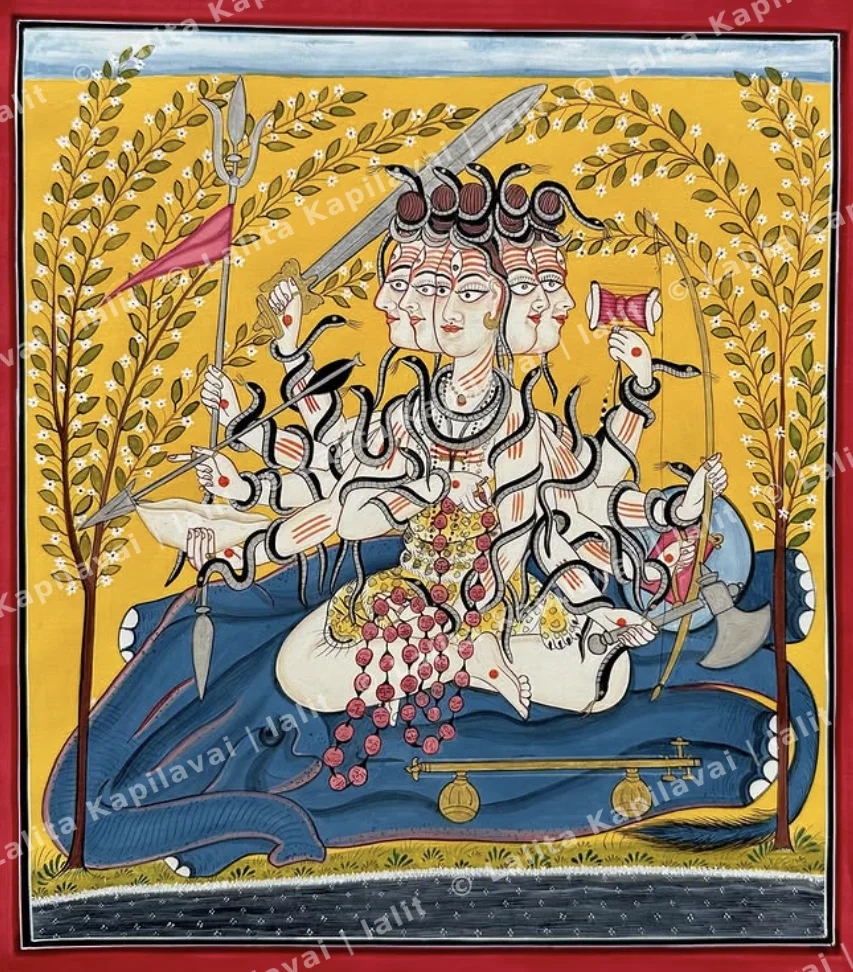
Shiva is one among the trinities in the pantheon of Hindu gods who is always engaged in the five divine acts of creation, preservation, destruction, concealment and revealing. The five faces related to these cosmic activities are Sadyojata, Vamadeva, Aghora, Tatpurusha and Ishana pointing to the directions of north, west, south, east and space respectively.
Basohli artist conceived this tantric form of Shiva with five faces and ten arms. There is a creation myth associated with Shiva. The sacred syllable ‘Om’ emerged from the playing of Shiva’s drum while he performed the anandatandava during the creation. The entire universe was created from that primordial sound. A puranic musical instrument veena is symbolically placed in this painting suggesting this act of shiva.
He holds different attributes in his ten arms: garland of skulls, bowl of elixir, arrow, flag, sword, drum, bow, shield and axe. The tenth arm is left in his lap indicating a meditative gesture. His five faces are cleverly dealt by the artist with the central one in three quarters and the remaining four in profile. His body is coiled by many snakes and smeared with the sacred ashes. He is seated on a sprawling corpse of elephant as he is also known by the name Pashupati. The figure occupies the entire part of the painting while the artist tries to accommodate narrow strips of sky and foreground following the traditional suit.
Colophon & Atelier Heritage
Published by the Atelier of Lalita Kapilavai. (To Be Updated)
For acquisitions, private viewing recitals, or scholarly monograph requests, contact the studio directly.
Email: contact@lalitakapilavai.com | Web: lalitakapilavai.com
Reproduction of sacred iconography and Tanjore masterworks strictly prohibited without written consent.