
Sarasvati Devi — Lalita Kapilavai — Traditional Artist
© Lalita Kapilavai — Traditional Artist. Digital Atelier & Cultural Archive. Digital reproduction, automated screen captures, and unauthorized printings are strictly prohibited.
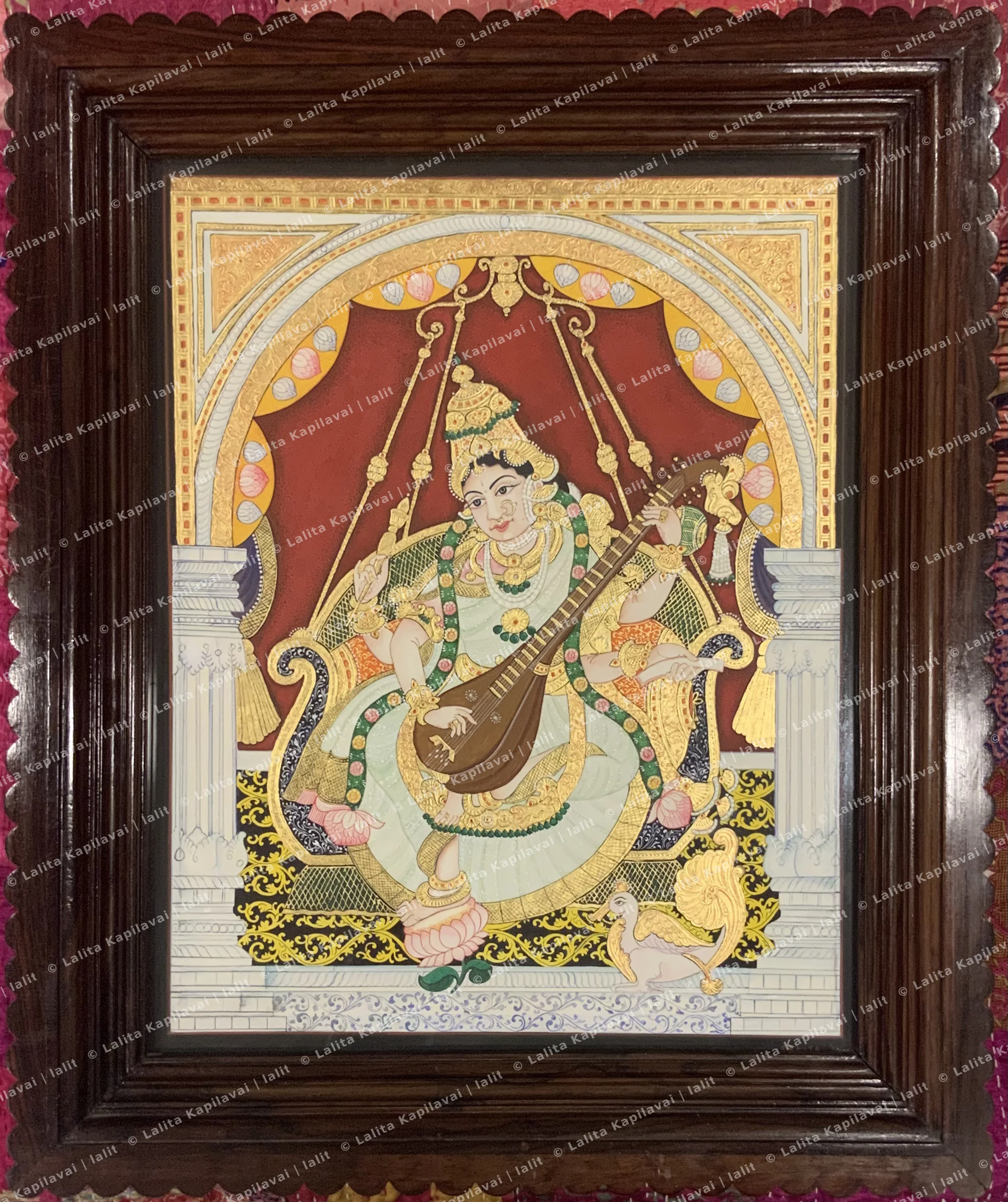
Sarasvati Devi
Natural Pigments, gold foil, gesso on handmade board using 300gsm Arches acid-free water colour paper, rosewood frame • L= 63cms; W= 53cms
Sarasvati Devi
Iconographic Commentary & Symbolism
Sarasvati is the Goddess of learning and knowledge. She is the embodiment of purity, composure and eternal bliss. She is thereby adorned in white garments symbolic of these virtues. There is a unique language of line and colour in bringing out the divine imagery in Mysore tradition. Highly stylised anthropomorphic imagery standing against dark background, subtle shading in the face and the traditional jewellery are some of the characteristic features of this tradition belonging to the 16th C Karnataka.
The kireeta (crown), Kanthabharana (necklace), Kasumala (coin-necklace), Haram (long chain), Vanki (v-shaped armlet), Kundala (ear hangings), Kankana (chiseled wristlets), Oddiyanam (waist belt), Vaijayanti maala ( a long garland of gold worn across her body) are some of the jewellery that are seen in almost all the female deities in this tradition. Vyali (composite animal) face is one of the most common motifs seen in many ornaments.
Here, goddess Sarasvati is seen playing veena (Kachchapi) symbolic of divine knowledge of music and seated on a bedecked swing that is hanging from above supported by four golden chains. She is seen in a poised state in an arched pavilion highly decorated with fine gesso work and covered with gold. The design on the carpet, arches and all over the frame is unique to this tradition. The swan, her divine vehicle, is seen at the bottom corner, adorned in gold.
